
A floor that dips, flexes or feels soft underfoot is telling you something about what sits beneath it. In New Orleans, that is often a damp crawl space, termite activity or framing that has been carrying a load for a very long time.
At Big Easy Flooring, we look at what is under a floor before we talk about what goes on top of it. A new floor laid over a moving structure is a short-lived floor.
This guide walks through the signs worth taking seriously, the usual causes behind them, and the order in which a sagging floor gets fixed.
If you already have a soft spot or a slope you want looked at, contact us and we will come out and see what is going on under it.
Signs Your Floor Has a Problem Underneath
A small amount of give in a wood-framed floor is normal, and plenty of older houses are not perfectly level from wall to wall. The useful question is not whether a floor is flat. It is whether the movement has stopped.
A stable slope in a century-old house can often be leveled during a floor replacement. A dip that keeps deepening, or a soft spot that keeps growing, points to something underneath that is still changing. These are the signs worth a closer look.
A Spring or Bounce When You Walk Across the Room
If dishes rattle or the floor visibly flexes as someone crosses the room, the joists or the subfloor are not stiff enough for the load on them.
Sometimes the cause is a subfloor that has delaminated or loosened from the joists. Sometimes it is a joist that has weakened, cracked or lost its support.
A Soft Spot That Gives Under Your Weight
 A soft area in one location is one of the more urgent signs. It often sits near a water source such as a bathroom, a kitchen sink, an exterior door or a window that leaks in a storm.
Localized softness usually means the subfloor, the joist below it, or both have taken on water. That is worth checking quickly, before the damaged area spreads.
If the soft spot sits beside a toilet, tub or shower, a slow leak at a drain or seal can keep the wood below wet for months without showing on the surface. Have the plumbing checked at the same time as the floor, or the repair will get wet again.
A Visible Dip, Slope or Hump
Lay a straight board or a long level across the floor and look for daylight underneath. A dip in the middle of a room often points to a sagging beam or a failing support. A hump can mean a support has pushed up while the framing around it has settled.
Rolling a marble or a ball is a rough check. A level and a straightedge tell you more.
Watch the walls and openings above the dip too. Interior doors that start to bind and drywall cracks running from the corners of openings do not prove a floor problem on their own, but next to a dip in the same area they help confirm one.
Tile That Cracks and Grout That Keeps Failing
Our own installation work runs on a simple principle: a floor that flexes will crack tile, whatever the tile cost. If tile in one area keeps cracking, or grout lines keep opening after repair, the substrate is moving.
Replacing those tiles without stiffening what they sit on simply resets the clock. Our tile flooring work always starts from a prepared, level substrate for exactly that reason.
What You Can Safely Check From the Crawl Space
If your home is raised and the crawl space is safe to enter, a flashlight look underneath tells you a lot before anyone is called. Go only where you can move without crawling over wiring, standing water or debris.
Look directly below the soft spot or dip. Dark staining, a musty smell, or wood that looks swollen or crumbly all point to water. A beam that visibly bows between two supports, or a gap between a beam and the post or shim beneath it, points to a support problem.
Press a screwdriver gently into a suspect joist. The USDA Forest Products Laboratory notes that decayed wet wood breaks across the grain while sound wood splinters, which is the difference you are feeling for. Wood that is hollow, layered or packed with soil-like material needs a termite inspection.
Take photos of anything you find, with something in the frame for scale. They make the first conversation with a pest inspector, engineer or contractor much faster.
What Usually Causes a Floor to Sag
Old framing that has stayed dry and free of insects can stay sound for a very long time. When a floor starts to fail, something usually reached the wood. In New Orleans homes, the cause tends to fall into one of three groups.
Wood Decay From a Damp Crawl Space
Rot does not happen in dry wood. A chapter by Rebecca E. Ibach of the USDA Forest Products Laboratory explains that decay fungi need moisture above the fiber saturation point, about 30 percent moisture content, to grow.
The same chapter notes that free water has to be present, from rain, condensation or wet ground contact, for wood to reach that point. Air-dried wood usually holds no more than 20 percent moisture, so decay will not occur.
That is why rot under a raised house is almost always a water problem first. Plumbing leaks, poor drainage around the piers, missing ventilation and storm water all keep framing wet enough to decay. Our guide to slab and crawl space moisture in New Orleans covers those sources in more detail.
Termite Damage You Cannot See From Above
Formosan subterranean termites are a serious problem in this city. LSU AgCenter researchers, writing in Louisiana Agriculture magazine in 2001, estimated $300 million of property damage per year in New Orleans alone.
The same article describes how these termites can enter through cracks in concrete as fine as 1/16 inch, without the typical mud tubes homeowners are told to look for. Once inside, they can stay out of sight while doing major damage.
For a floor, that means a joist can look intact from the crawl space and still be hollow inside. Any sudden softness or sag deserves a termite inspection by a licensed pest control professional before any repair plan is made.
Supports That Settled, Shifted or Were Never Enough
Raised homes rest on piers, posts and beams. If a pier settles, a shim crushes or a post shifts, the beam it carries drops, and the floor above it follows.
Some sag is also the result of earlier work. A wall removed during a past renovation, a heavy item added to a room, or joists cut to run plumbing can all leave a section of floor carrying more than it was built for.
How a Sagging Floor Gets Fixed, in the Right Order
The order of the work matters more than any single repair. Fixing things out of sequence is how homeowners end up paying twice.
Stop the Cause First
Water and termites come before carpentry. If a leak is still feeding the crawl space, or termites are still active, new framing will fail the same way the old framing did.
That means plumbing repairs, drainage or ventilation work, and a termite inspection and treatment, where any of those apply.
Give the crawl space time to dry after any leak or flood. The Forest Products Laboratory chapter notes that air-dried wood usually holds no more than 20 percent moisture, a level at which decay does not occur. Drying the structure is part of the repair, not a delay to it.
Repair or Reinforce the Framing
Once the cause is under control, the damaged framing can be dealt with. Depending on what is found, that may mean reinforcing weakened joists, replacing decayed sections, or correcting the piers and posts that carry the beams.
The common approaches are well established.
A weakened joist can be reinforced by fastening a new full-length member alongside it, often called sistering. A beam that sags between supports may need an added post and footing. A pier that has settled may need its shims replaced or the pier itself rebuilt.
Lifting a floor that has sagged for years is done slowly. Forcing it level in one go can crack plaster, rack door frames and stress the framing further, so the correction is usually made in small steps.
This is structural work. For anything beyond a minor repair, a structural engineer or an experienced framing contractor should decide what is needed. In New Orleans, ask whether the repair needs a permit from the City’s Department of Safety and Permits before the work starts.
Repair the Subfloor and Level the Surface
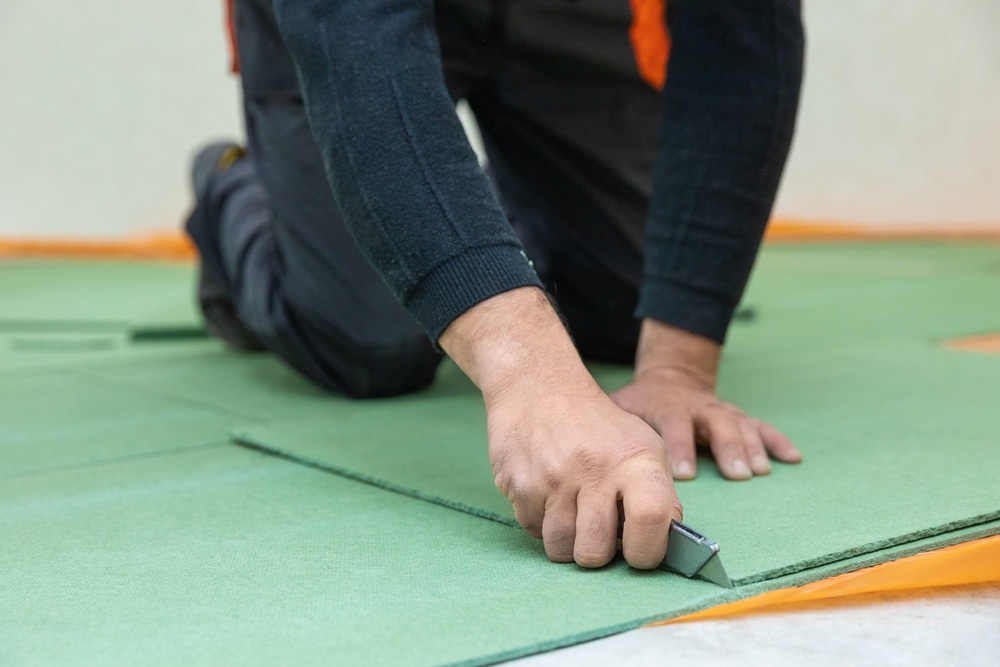 With the structure sound, the subfloor comes next. Damaged panels are replaced, loose panels are refastened, and the surface is leveled so the new floor has a flat, stiff base.
This is where we come in. Subfloor preparation, leveling and removing the old floor are real line items on our quotes, not afterthoughts, as our page on flooring installation explains. Our article on proper subfloor preparation walks through why that step decides how long a floor lasts.
Then Lay or Restore the Floor
Only now does the finished floor go down. If you are keeping original wood, the same logic applies to refinishing original hardwood in a historic home: a sound structure first, then the sanding and finish.
Why New Orleans Homes Are Especially Hard on Floor Framing
The conditions here put more pressure on floor structures than in many other places. The table below sets out the main local factors, what each does to a floor, and what helps.
| Factor | Effect on the Floor | What Helps |
|---|---|---|
| Humid, poorly vented crawl spaces | Framing stays damp enough for decay fungi to grow, weakening joists and subfloor | Fix leaks and drainage, improve ventilation, and check moisture before new flooring goes down |
| Formosan subterranean termites | Joists and beams can be hollowed from inside while looking sound from the outside | A licensed termite inspection and treatment before any framing or floor repair |
| Storm water and flooding | Subfloor panels swell, lose stiffness and can separate from the joists | Dry the structure fully, then replace damaged subfloor sections instead of covering them |
| Older raised homes on piers | Settled piers or crushed shims let beams drop and floors dip | Have the supports assessed and corrected before leveling or refinishing the floor |
If your home has been through high water, our guide on what to do when flood water reaches your floors covers the first steps before any of this repair work begins.
Fix the Framing Before You Replace the Floor in New Orleans
In most cases, a sagging or bouncy floor is a structure problem that shows up in the flooring. The floor covering is where you notice it, not where it starts.
At Big Easy Flooring, we survey what is already down before we quote, and we are honest about what can be saved and what has to come up.
If the structure needs work, we will tell you before any new floor goes in. Once it is sound, we handle the subfloor preparation and the floor itself.
To book an on-site look at your floor, call us at (504) 305-8727.
Frequently Asked Questions
Is a bouncy floor dangerous?
A slight bounce is not usually an immediate danger, but it means the floor is less stiff than it should be. A bounce that is getting worse, or a soft spot that gives under your weight, should be inspected promptly. Avoid placing heavy furniture or appliances over that area until it has been checked.
Can a sagging floor be fixed without tearing up the whole floor?
Often, yes, when the framing can be reached from a crawl space underneath. Many raised New Orleans homes allow that access. Whether the finished floor above can stay depends on how much damage the subfloor has taken.
Does a sagging floor mean my foundation is failing?
Not necessarily. A dip can come from a settled pier, a crushed shim, a decayed or termite-damaged joist, or framing that was overloaded. Each has a different fix, which is why the cause needs to be found before any repair is chosen.
How do I tell rot from termite damage?
Decayed wet wood tends to break across the grain, while sound wood splinters, according to the USDA Forest Products Laboratory. Termite damage can leave wood hollow inside while the surface looks intact. A licensed pest control inspector can confirm termite activity.
Can I just put new flooring over a soft spot?
It is not a good idea. A new floor laid over a soft or moving subfloor will move with it, and tile in particular will crack. Fix the structure and the subfloor first.
Will leveling compound fix a sagging floor?
Leveling compound can correct an uneven surface on a sound structure. It does not stiffen a weak joist or stop a beam from dropping further. If the floor is still moving, leveling only hides the symptom for a while.
Why do so many older New Orleans homes have sloping floors?
Many older homes here sit on piers above damp ground, in a climate that is hard on wood. Over time, settled supports, moisture and termite activity can all leave floors out of level. A long-settled, stable slope is a different case from a dip that is still growing.
Who should I call first about a sagging floor?
If you see soft spots, water damage or signs of termites, start with a licensed pest control professional and, for structural concerns, a structural engineer or framing contractor. Once the structure is sound, a flooring contractor can prepare the subfloor and install the new floor.