

Call Now: (504) 305-8727
Call Now: (504) 305-8727

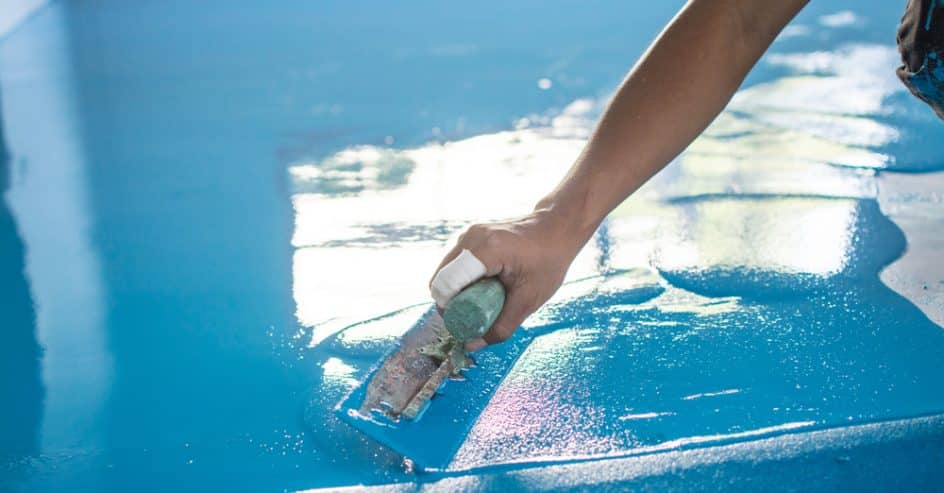
Most of the New Orleans metro sits on slab-on-grade concrete poured over a high water table, and many of the older slabs went down with no vapor barrier underneath. That one local fact decides more coating outcomes than any product choice, because a coating does not fail on the shelf. It fails on a slab that was never ready to receive it.
Your slab does its job quietly, which is exactly why nobody looks at it until a coating is already on the calendar. At Big Easy Flooring, we check readiness before we quote a system, because the checks below are cheaper than any repair they prevent.
If you are planning a coating and want the slab looked at first, contact us and we will read it before anyone commits to a product.
Age is the first readiness question, and it only applies to newer concrete.
Freshly poured concrete carries a large amount of water that has to work its way out before anything seals the surface. A cure period of around 28 days is the commonly specified minimum before coating new concrete, and in our humidity the safe answer often runs longer.
Coating early does not save time. It traps moisture that was still on its way out, and the coating pays for it later.
Humidity stretches the timeline further. Concrete dries by giving its water to the air, and New Orleans air spends half the year already full. The same pour that would test dry in a month somewhere arid can still be releasing moisture here well past the textbook date, which is one more reason the calendar is a starting point and the measurement is the answer.
A slab that has been down for decades is fully cured, so its readiness is not about age at all. It is about what has happened to it since: what was glued to it, what soaked into it, and how much ground moisture moves through it today.
That is why the rest of this checklist matters more than the calendar for most New Orleans homes.
One wrinkle worth knowing: repairs count as new concrete. A slab that was patched, leveled or resurfaced last month has fresh cementitious material in it, and those sections need their own cure and their own moisture check even though the slab around them is fifty years old.
It is a common surprise on renovation projects, where the leveling compound goes down one week and the coating is scheduled the next. The patches are the youngest concrete in the room, and they behave like it.
Walk the floor with a flashlight held low. The surface tells you most of what a coating will meet.
 Tile mastic, carpet glue, cutback adhesive, and old sealers all sit between the coating and the concrete it needs to grip. If water droplets bead on the surface instead of soaking in, something is still sealing it.
None of this rules a slab out. It rules grinding in, because the residue has to come off before anything bonds.
Rub the bare concrete with your palm. If it leaves a chalky powder, the surface layer is weak, and a coating applied over it will bond to dust rather than to concrete.
A weak top layer is common on older interior slabs and on floors that were steel-troweled hard. Grinding removes it and exposes sound concrete underneath.
Grinding does one more job at the same time: it opens the surface profile. Concrete that is polished smooth gives a coating nothing to grip, while a properly ground surface has a fine texture, similar to sandpaper, that the resin keys into. Readiness is as much about texture as cleanliness, which is why prep method appears on every serious quote.
Hairline cracks are normal and get filled during prep. What matters is movement: a crack with one side higher than the other, or one that has visibly grown, is a slab still settling, and that is a conversation before any coating.
Low spots show up with a simple puddle test. Where water stands is where a coating will pool and where any future moisture will sit.
Oil and chemical staining belongs in this section too, especially in garages. Oil soaks into concrete rather than sitting on it, and a coating over an oil-saturated patch bonds to the oil instead of the slab. Deep stains need degreasing and sometimes repeated treatment before the floor counts as ready, and an installer who shrugs at a dark, saturated patch is planning someone else’s callback.
Moisture is the readiness question in this metro, and it is the one you cannot judge by eye on a dry-looking floor.
A slab that shows damp patches after rain, darkens along cracks, or gives a bare room a musty edge is telling you ground moisture is moving through it. Coating over that traps the path shut, and the coating becomes the thing that fails.
Check more than one room and more than one week if you can. Moisture rarely moves evenly under a whole house, so a garage bay can read wet while the interior slab reads fine, and a floor that seemed dry in a rainless stretch tells a different story after a week of afternoon storms.
White, powdery deposits on bare concrete are minerals left behind by water that traveled through the slab and evaporated at the surface. The powder itself wipes away easily. What it says does not: moisture has an active route through this concrete, and it will use that route again after a coating seals the exit.
Efflorescence anywhere on a slab moves moisture testing from advisable to mandatory.
A simple home indicator: tape a square of clear plastic tightly to the bare slab and leave it a day. Condensation or a dark damp square underneath means moisture is actively coming up, and the slab needs professional numbers before any coating.
It is a rough screen, not a verdict. A dry result does not clear the slab on its own.
 Professional readiness comes down to measured moisture. In-situ probes read relative humidity at about 40 percent of the slab’s depth after a day of equilibration, with roughly 75 to 80 percent RH as the commonly accepted ceiling for most coatings. The older surface test measures vapor emission, with about 3 pounds per 1,000 square feet over 24 hours as the usual limit.
A slab over those numbers is not a failed slab. It needs a moisture mitigation coat first, which is a known step with a known cost, and far cheaper than a peeled floor.
Individual coating products publish their own moisture limits, and those numbers govern over any rule of thumb. Part of a professional readiness check is matching the measured slab to the specific system being quoted, not to a generic ceiling.
The same slab that would pass easily in a dry market works against you here, for reasons that sit under the house rather than in it.
Install day has its own readiness clock too. Resins cure inside a defined temperature and humidity window, and a slab that passed every test can still meet a July afternoon that sits outside it. Scheduling around the weather, or controlling the space, is the last check on the list rather than an afterthought.
| Factor | Effect on the slab | What helps |
|---|---|---|
| High water table | Ground moisture pushes up through the concrete year-round | Measured moisture testing before any coating decision |
| Older pours with no vapor barrier | Nothing below the slab blocks that moisture path | A mitigation coat under the finish system when numbers run high |
| Soft, shifting delta soils | Settling produces cracks and out-of-level sections over time | Crack assessment for movement before filling and coating |
| Humid cure conditions | Surface moisture lingers, and resins cure inside a defined window | Scheduling and site control on install day |
One more local pattern deserves a line: a slab can pass in December and fail in July. Ground moisture here moves with the seasons, so a reading taken months before installation describes a different floor than the one the crew will meet. Testing close to the install date, in conditions like the ones the coating will cure in, is the honest version of the check.
So what does a professional readiness check actually include? On our jobs it is a short, concrete list: a walk of the full surface for adhesives, stains, dusting and damage, a moisture measurement matched to the system being quoted, a look at every crack for movement, and a written prep scope naming what gets ground, filled, degreased or mitigated before the first coat. Ten steps of diligence, one page of paper, and the whole difference between a quote and a guess.
This is also why the same readiness rules apply whether the finish is epoxy or a decorative system. The slab does not care which product is going on top. Our epoxy flooring and stained concrete work both start from the same checks, and commercial floors get the same treatment through our installation work across the metro.
Every failed coating we are called to look at tells the same story in reverse: the product gets blamed, and the slab had the answer all along. Readiness is measurable, the checks are quick, and every one of them costs less than redoing a floor.
If your slab passes, you coat with confidence. If it does not, you know exactly what it needs first, and that knowledge is the whole value of testing.
Either way, the decision gets made from numbers instead of hope, which is the only way a coating in this metro should ever be bought.
Readiness has one more payoff nobody mentions: it protects the warranty. Coating warranties commonly exclude failures caused by slab moisture when no test was performed, so the reading taken before installation is also the paper that protects whatever guarantee comes with the system. Check the specific product’s terms, because they govern.
At Big Easy Flooring, we read slabs across New Orleans before quoting a single system. Call us at (504) 305-8727 and we will tell you plainly whether your floor is ready.
How long after pouring concrete can you coat it?
Around 28 days is the commonly specified minimum cure for new concrete, and in New Orleans humidity the practical answer often runs longer. Measured moisture, not the calendar alone, gives the real green light.
Can you coat a slab that had tile or carpet on it?
Yes, after the adhesive comes off. Old mastic and glue block the bond, so those floors get diamond ground back to clean concrete first.
What happens if you coat a damp slab?
The coating seals the moisture path shut, pressure builds beneath the film, and the floor bubbles, clouds, or peels, often months later. That failure is preventable with a moisture reading taken before installation.
Does a dry-looking slab mean it is ready?
No. Surface appearance says nothing about the moisture moving through the concrete from below, which is why the readings matter in this metro more than most.
What moisture level is acceptable for a floor coating?
Roughly 75 to 80 percent internal relative humidity, or about 3 pounds of vapor emission per 1,000 square feet over 24 hours, are the commonly accepted ceilings for most systems. Individual products publish their own limits, and those govern.
Can a slab with cracks still be coated?
Usually yes. Stable hairline cracks are routed and filled as normal prep. Cracks that are moving or offset need assessment first, because a coating cannot hold a slab together.
Is the taped-plastic test reliable?
It is a useful quick screen and nothing more. A damp result is a clear warning, while a dry result still needs professional numbers before a coating goes down.
Who should test the slab?
The installer quoting your floor should test it as part of the quote, and put the results in writing. A bid priced without a moisture reading on a New Orleans slab is a bid priced on hope.
 By Big Easy Flooring
  Aug 20, 2026